

『Shenyang Vortex Flow Meter』Related information(clamp on meter|electromagnetic meter|venturi meterrotameter|orifice meter|ultrasonic flow meter|mass flow meter|coriolis mass flow meter|coriolis flow meter|magnetic flow meter|magmeter flow meter|magflow flow meter|mag meter flow meter|electromagnetic flow meter|vortex flow meter|turbine flow meter|thermal mass flow meter|thermal flow meter|rotameter flow meter)

1. Can vortex flowmeters be installed vertically?
Vortex flowmeters can be installed vertically, but some installation points need to be noted. Firstly, vortex flowmeters are feasible for vertical installation. However, in order to ensure the accuracy and stability of the measurement, special attention should be paid to the following points:
1. Avoid the influence of sediment and bubbles: When installed vertically, ensure that there is no accumulation of sediment or bubbles inside the flowmeter, as these factors may interfere with the measurement accuracy of the flowmeter.
. Chenzai rubber residue may adhere to the measuring electrode of the flowmeter, causing signal distortion; Bubbles may generate false flow signals. 2. Keep the electrode axis horizontal: Although vortex flowmeters can be installed vertically, it is recommended to keep the measuring electrode axis horizontal to better avoid the influence of sediment and bubbles. This can minimize the interference of sediment and bubbles on the measuring electrode, thereby improving the accuracy of the measurement. Interpretation 3: Consider the effects of turbulence and eddies: It should be noted that the measurement of vortex flowmeters, such as the key principle, does not depend on the characteristics of the flow rate. Therefore, if certain turbulence and eddies are generated in the pipeline, as long as these turbulence and eddies occur in the non measurement area, they will not have a direct impact on the measurement. However, in practical applications, it is still advisable to avoid excessive turbulence and eddies as much as possible to ensure the stability of the measurement. In summary, vortex flowmeters can be installed vertically, but it sho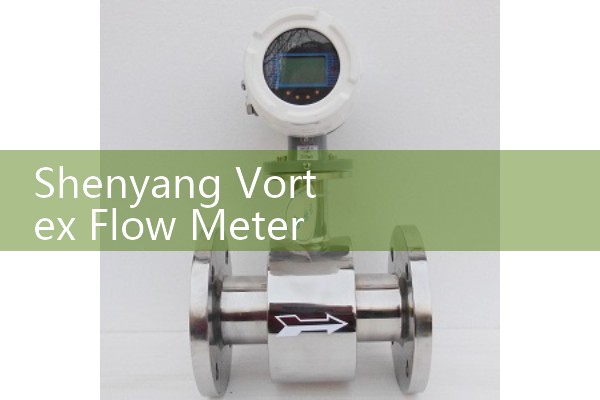
2. What are the differences between vortex street and turbine flowmeter?
The difference between a vortex flowmeter and a turbine flowmeter mainly lies in their working principle, applicable medium, cost, and application scenarios, as follows:
1. Differences in working principle. Vortex flowmeter: When fluid flows through non streamlined obstacles, periodic vortices (vortex streets) will be formed behind the obstacles.
. The vortex frequency is directly proportional to the fluid velocity, and the flow rate can be calculated by measuring the frequency. The formula is: f=Kv, where f is the vortex frequency, v is the flow velocity, and K is a constant related to the shape of the object and fluid properties. Turbine flowmeter: The fluid drives the turbine to rotate, and the turbine speed is proportional to the flow rate. The flow rate is calculated by measuring the speed. The formula is: Q=KN, where Q is the flow rate, N is the rotational speed, and K is a constant related to fluid characteristics and turbine design.
2. Differential vortex flow meters suitable for resolving quality issues: liquids such as water, oil, alcohol, chemical raw materials, etc. Gases: air, oxygen, nitrogen, natural gas, coal gas, etc. Steam: saturated steam, superheated steam. Characteristics: Strong adaptability to fluid types, capable of covering multiple media. Turbine flowmeter: gases: air, nitrogen, oxygen, hydrogen, biogas, natural gas, e
 Hot Product
 Related AD