

『Engine Oil Flow Meter 2 Inch: Seamless Integration in Assembly Line Loops』Related information(clamp on meter|electromagnetic meter|venturi meterrotameter|orifice meter|ultrasonic flow meter|mass flow meter|coriolis mass flow meter|coriolis flow meter|magnetic flow meter|magmeter flow meter|magflow flow meter|mag meter flow meter|electromagnetic flow meter|vortex flow meter|turbine flow meter|thermal mass flow meter|thermal flow meter|rotameter flow meter)
Engine Oil Flow Meter 2 Inch: Seamless Integration in Assembly Line Loops
Quick Answer: A 2-inch engine oil flow meter in assembly line loops must handle high viscosity, fit into compact pipework, and provide real-time data to PLCs. Silver Instruments supplies oval gear meters with 4-20 mA HART and pulse outputs that install directly into 2-inch lines without extra manifolds or special training. Most loops go live in under two hours.
Why a Dedicated 2-Inch Meter Matters for Engine Oil
Engine oil on a moving assembly line is not like water. It runs thick at 200 to 800 cP at room temperature. It changes viscosity as ambient temperature swings from morning to afternoon. Many flow meters drift or clog if you do not pick the right technology for the job.
Silver Instruments has supplied oval gear flow meters for engine oil fill loops in motorcycle assembly plants in Vietnam, car engine lines in Mexico, and marine diesel test benches in Turkey. The common request we get is for a 2-inch connection because the fill manifold piping is almost always DN50 or 2 inch ANSI. A larger meter wastes space and slows response. A smaller meter chokes the flow and triggers false alarms when the pump runs at full stroke.
Real World Assembly Line Loop Design
In a typical engine oil fill loop, a central tank feeds a ring main. Branches drop oil into individual engines on a moving conveyor. The flow meter sits on the return leg or on each fill point to track total oil consumed per engine. The loop keeps oil moving even when no engine is being filled. This prevents settling and maintains temperature.
Here is the thing. Most engineers skip the fact that return line pressure can bounce from 0.5 bar to 6 bar in seconds when fill nozzles open and close. A 2-inch oval gear meter from Silver Instruments handles these pressure spikes without signal noise. We have seen this on customer sites many times where turbine meters lost accuracy because of the pulsating flow. Oval gear technology ignores the pulses and tracks actual volume displacement.
Technical Specs that Make Integration Painless
The 2-inch engine oil flow meter we ship most often is the OGM series with cast iron or stainless steel body. The measuring chamber uses hardened steel oval gears and PEEK bearing plates. These materials resist the slight acidity found in used engine oil if you are metering on a recycling loop or a test bench.
Key numbers that engineers ask for. Flow range from 10 L/min to 200 L/min for SAE 10W-40 at 40 degrees C. Accuracy stays within plus minus 0.5 percent of reading across the entire range. Repeatability is better than 0.1 percent. Viscosity range from 1 cP up to 1000 cP without correction factors. Pressure rating goes to 16 bar standard, with 40 bar as a custom option. Temperature of fluid from minus 20 degrees C to 120 degrees C.
Output signals are what drive the integration. The meter comes standard with a dual channel quadrature pulse output. This lets you connect directly to a PLC high speed counter or a Silver Instruments paperless recorder. The 4-20 mA HART output option gives you flow rate and totalizer data over a single pair of wires. Field wiring takes four terminals. Power, signal plus, signal minus, and earth. No complicated configuration software needed.
Mounting and Loop Integration Without Downtime
Because the oval gear meter has no straight pipe requirement, you can fit it right after a bend or a valve. In a cramped assembly line mezzanine where 2-inch pipes snake between cable trays
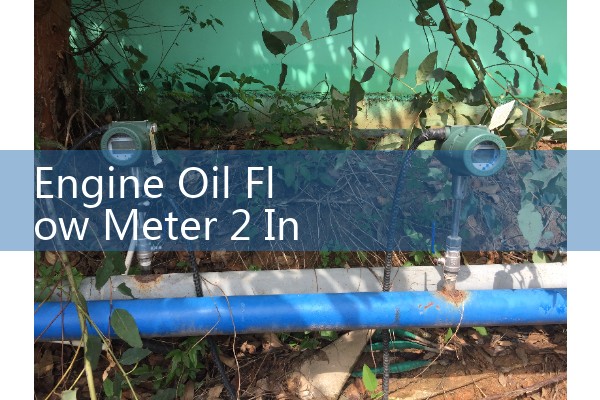
A paint manufacturer in Southeast Asia ordered ten 2-inch OGM meters last year for an engine oil blending and filling skid. They installed them between the storage tank pump and the fill nozzle manifold. Each meter connects to a local PLC that batch controls the fill volume per engine pallet. The total integration time was one shift per skid. The maintenance team did the electrical and piping work themselves with our wiring diagram PDF and a WhatsApp call.
Common Pitfalls and How to Avoid Them
We often see new installations where air gets trapped in the meter chamber. Oval gear meters measure volume and cannot tell liquid from air. A simple air release valve installed just upstream fixes this. We add a tapping point on the meter body for customers who work with engine oils that foam easily at high fill speeds. This small detail saves hours of troubleshooting.
Another point. If your assembly line uses different oil grades in the same loop, flush the meter with a standard flushing oil between batches. Residual thick 20W-50 oil inside a meter calibrated for 5W-30 will cause a minor offset. The offset is typically under 0.3 percent but in precision fill applications where each engine gets exactly 4.50 liters, that matters. Silver Instruments offers a quick purge port as an option on the 2-inch body.
How to Order and What to Specify
Send us your operating pressure in bar, temperature in degrees C, pipe size DN or inch, and the oil viscosity grade you use. Tell us your typical flow range and the required output signal. We provide a fixed price quote within one business day for customers in Southeast Asia, Oceania, Latin America, Africa, and the Middle East. We ship from our bonded warehouse to avoid customs delays. See our oval gear flow meter for engine oil page for detailed data sheets and CAD files.
Frequently Asked Questions
Can the 2-inch meter handle engine oil with soot particles from a used oil recycling loop?
Yes. The OGM series uses hardened steel gears and large clearances that pass particles up to 100 microns. Install a Y strainer upstream if particles are larger or if you run heavy fuel oil blends.
What happens if the loop pressure exceeds the meter rating?
The meter body has a safety factor of 1.5 times the rated pressure. A pressure spike above 24 bar on a 16 bar rated meter may deform the gear chamber. We recommend a pressure relief valve set to 10 percent above your normal operating pressure.
Do I need a flow computer or can my PLC do the totalizing?
Your PLC can do the totalizing if it accepts high speed counter inputs. The pulse output from the meter is 10 pulses per liter or 100 pulses per liter depending on the configuration. No external flow computer is required.
Can the meter measure in both flow directions?
Standard configuration is bidirectional. The pulse output indicates direction when you use the quadrature signal option. This is useful if your assembly line loop recirculates oil in both directions during cleaning cycles.
What is the lead time for a 2-inch engine oil flow meter with HART output?
For common configurations with cast iron body and ANSI flanges, we hold stock in our warehouse. Lead time is 3 working days. Custom materials or pressure ratings may take 15 working days.
 Hot Product
 Related AD