

『Flow Turbine Meter Diagnostics: Identifying Rotor Bearing Wear and Correcting K-Factor Accuracy Drift』Related information(clamp on meter|electromagnetic meter|venturi meterrotameter|orifice meter|ultrasonic flow meter|mass flow meter|coriolis mass flow meter|coriolis flow meter|magnetic flow meter|magmeter flow meter|magflow flow meter|mag meter flow meter|electromagnetic flow meter|vortex flow meter|turbine flow meter|thermal mass flow meter|thermal flow meter|rotameter flow meter)

Flow Turbine Meter Diagnostics: Identifying Rotor Bearing Wear and Correcting K-Factor Accuracy Drift
Quick Answer: Rotor bearing wear in a turbine flow meter usually appears as K-factor drop at low flow, noisy pulse output, or a rotor that stops too soon after the liquid stops. Confirm bearing wear by comparing field K-factor against the original calibration sheet and by checking radial play in the rotor. Correct the drift by replacing the bearing set, cleaning the internals, and running a new K-factor calibration on a traceable flow bench.
Why Turbine Meter K-Factor Drift Starts With Bearings
A turbine flow meter measures flow because the liquid spins a rotor. The rotor speed is converted into pulses per unit volume. This number is the K-factor. A DN40 meter may have a factory K-factor of 6200 pulses per liter. A DN100 meter may have 850 pulses per liter. These values change when the rotor bearings wear. Bearing wear adds mechanical drag. At low flow the rotor under-registers. The meter then reports less volume than the actual flow. Many users see totalizer error before the 4-20 mA HART output triggers a control room alarm.
We have seen this on customer sites many times. A water treatment plant in Indonesia used a DN50 turbine meter on raw water. The reading shifted by 3.2 percent at 15 percent of full scale. The bearing set had visible radial play. The error was small at high flow but large at low flow. This pattern is a classic sign of bearing drag.
Field Symptoms of Rotor Bearing Wear
Most engineers skip this part because the meter still gives a signal. In practice, you can catch a failing bearing before totalizer error becomes large. Watch for a K-factor drop at low flow only. A healthy turbine meter holds a fairly flat K-factor across the recommended range. A worn rotor drops below the factory value at 10 to 25 percent of flow. The pulse output may also become erratic at a stable flow. If you read the frequency with a handheld counter, the reading jumps more than normal.
Another symptom is slow rotor spin down. After you isolate the meter, a healthy rotor coasts briefly. Here is the thing. A worn rotor stops quickly. You may also notice a small increase in pressure drop across the meter. In some cases the meter body sounds rough or the signal drops out for a few seconds.
How to Check Rotor Bearing Wear in the Field
Shut off the flow and isolate the meter. Remove the meter from the line if the process allows it. Spin the rotor by hand. A healthy rotor spins freely and coasts. A worn rotor feels tight or stops immediately. Use a flashlight to inspect the bearing area. Check for radial movement by pushing the rotor sideways. On a small DN15 meter, radial play above 0.1 mm is a problem. On larger DN80 and above meters, the acceptable limit may be 0.15 mm but check the supplier manual.
Compare the current K-factor with the factory calibration sheet. Use a frequency counter or flow computer. At 50 percent flow, the K-factor should stay within 0.5 percent of the original value for a clean liquid. Because bearing wear is not the only cause of drift, also check the strainer or filter. A clogged filter can change the velocity profile and cause low readings. Check the liquid temperature with a PT100. If the process temperature changed by more than 20 °C, viscosity may explain part of the shift.
Correcting K-Factor Accuracy Drift
A field K-factor adjustment can fix a small linear offset. But if the rotor bearings are worn, do not mask the problem with a new K-factor alone. The meter will drift again. Replace the bearing set and shaft if needed. Clean the rotor and the internal bore. Then perform a new calibration. For a DN25 turbine meter on solvent at 22 cP, the factory K-factor may be 9800 pulses per liter. After 14 months of service the field K-factor at low flow may drop to 9340 pulses per liter. That is a 4.7
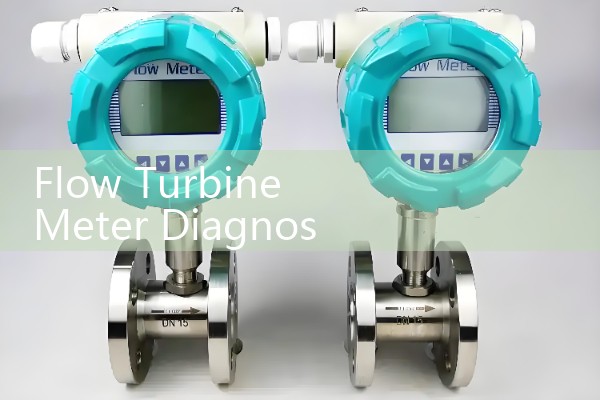
A turbine flow meter K-factor correction should only follow a mechanical inspection. A proper calibration uses at least 5 points across the flow range. Typical points are 10, 25, 50, 75, and 100 percent of full scale. Record pulses per unit volume at each point. Use a master meter or a gravimetric bench traceable to ISO/IEC 17025. Keep the liquid temperature stable within ±2 °C. Maintain enough back pressure to prevent cavitation. If the meter has 4-20 mA HART, compare the digital PV with the loop current. Adjust the K-factor in the flow computer or the transmitter only after checking the mechanical condition of the meter.
Real Example From a Paint Manufacturer in Vietnam
Last year a customer in Vietnam asked us about a DN25 turbine meter on solvent. The meter had been in service for 14 months. The reading drifted by 4.7 percent against the batch weight. The output signal became noisy below 20 percent flow. The user checked the filter and found it clean. They sent the meter to their calibration bench. Both rotor bearings showed wear. One shaft had a visible groove. After replacing the bearing set and recalibrating, the meter matched the reference within 0.2 percent across a 10:1 turndown. The key lesson was not to adjust the K-factor before opening the meter.
When to Repair vs Replace a Turbine Meter
A bearing kit for a DN40 turbine meter often costs less than 150 USD. A new DN40 turbine meter with 4-20 mA HART output may cost between 500 and 900 USD depending on body material and connection. If the rotor blades are pitted, replace the internals. If the meter body shows erosion or the shaft seat is worn, replace the whole meter. For a custody transfer line, a new meter with a fresh calibration certificate is often cheaper than a failed audit. For a simple batching loop, bearing replacement is usually enough.
Get a Turbine Meter Quote From Silver Automation Instruments
We supply turbine flow meters with 316 stainless body, tungsten carbide bearings, and calibration traceable to ISO/IEC 17025. Send us your liquid type, viscosity in cP, flow range, pipe size in DN, process temperature in °C, pressure in bar, and output requirement. We will recommend a meter and K-factor calibration range that fits your application. Contact Silver Automation Instruments at Tel: +86-25-68650347. Whatsapp: +86-25-52155837. WeChat: +86 15365082610.
Quick FAQ for Turbine Meter Diagnostics
How do I know if rotor bearing wear is causing K-factor drift? Compare the K-factor at low flow and high flow. If the low flow K-factor drops more than 2 percent from the factory sheet but high flow stays close, suspect bearing drag. Check radial play and spin down.
Can I just adjust the K-factor in the flow computer? You can adjust a small linear offset. But if the rotor is mechanically worn, the meter will drift again. Replace bearings first and then recalibrate.
How often should a turbine flow meter be recalibrated? For clean liquids, every 12 to 18 months is common. For abrasive or high viscosity fluids, check every 6 to 12 months. Bearings may need replacement before calibration if the meter shows low flow drift.
What is an acceptable K-factor shift after calibration? For a flow meter with 0.5 percent accuracy class, the field K-factor should stay within 0.5 percent of the factory curve. For a 1.0 percent class meter, stay within 1.0 percent. A shift larger than this needs investigation.
Does Silver Automation Instruments repair turbine flow meters? We supply replacement bearing kits, rotors, and complete turbine flow meters. We also arrange recalibration for the meters we provide. Send us the meter model, DN size, and process liquid for a quote.
 Hot News
 Related AD