

『Internal vortex flowmeter』Related information(clamp on meter|electromagnetic meter|venturi meterrotameter|orifice meter|ultrasonic flow meter|mass flow meter|coriolis mass flow meter|coriolis flow meter|magnetic flow meter|magmeter flow meter|magflow flow meter|mag meter flow meter|electromagnetic flow meter|vortex flow meter|turbine flow meter|thermal mass flow meter|thermal flow meter|rotameter flow meter)
1. What is the detailed composition of a vortex flowmeter?
Vortex flowmeter is mainly used for flow measurement of industrial pipeline medium fluids, such as gas, liquid, vapor and other media.. The vortex flowmeter consists of two parts: a sensor and a converter (see figure below). Sensors include vortex generators (fluid barriers), calibration and measurement components, instrument bodies, etc; The converter includes a preamplifier, a filtering and shaping circuit, a D/A conversion circuit, an output local width interface circuit, terminals, brackets, and protective covers. In recent years, intelligent flow meters have also incorporated microprocessors, display communication, and other functional modules into the converter.
2. What internal parameters of the vortex flowmeter need to be set during specific use? The amplifier of the vortex flowmeter varies depending on its function and version.
1、 A vortex flowmeter with simple functions includes the following parameter options: instrument coefficient, small signal cutoff, 4-20mA corresponding output range, sampling or damping time, cumulative reset, etc.
2、 The vortex flowmeter with comprehensive functions, in addition to the above, also includes the following parameter options: type of measuring medium, flow compensation setting, flow unit, type of output signal, temperature upper and lower limits, pressure upper and lower limits, local gas pressure, medium standard density, communication settings (such as trigger number, baud rate, data bit, etc.). ~~Professional manufacturer and seller of flow meters, welcome to discuss and negotiate~
3. The difference between turbine flow meters and vortex flow meters should be explained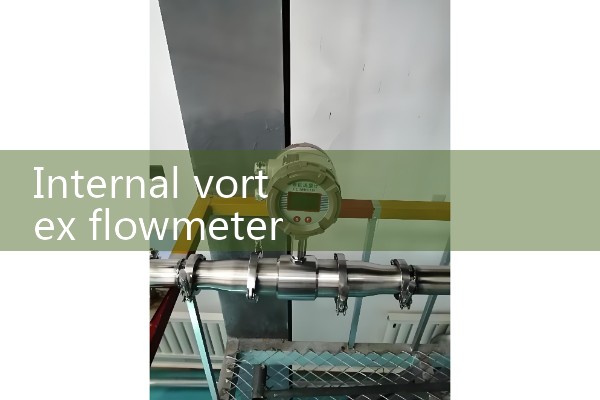
KNKE, a well-known American imported flowmeter brand with good customer reputation and fast delivery time, answers your question.
1. Differences in application fields: Vortex flowmeter slag: mainly used for flow measurement of industrial pipeline media fluids, such as gas, liquid, vapor and other media.
. Its characteristics are small pressure loss, large range, high accuracy, and almost unaffected by parameters such as fluid density, pressure, temperature, viscosity, etc. when measuring volumetric flow rate under working conditions. Without any movable mechanical parts, the macro beam has high reliability and low maintenance. The instrument parameters can be stable for a long time. Turbine flowmeter: widely used for measuring objects such as petroleum, organic liquids, inorganic liquids, liquefied gas, natural gas, coal gas, and low-temperature fluids. It has a simple structure, few processed parts, light weight, easy maintenance, high flow capacity (the same caliber can pass through a large flow rate), and can adapt to high parameters (high temperature, high pressure, and low temperature). 2. Differences in Production and Manufacturing: A turbine flowmeter is an instrument that uses a multi blade rotor (turbine) to measure the average flow rate of a fluid and calculate the flow rate or total flow rate accordingly. The vortex flowmeter is designed and manufactured based on the Karman vortex principle. Measure flow rate using the principle of fluid oscillation. When the fluid passes through the vortex transmitter in the pipeline, the triangular vortex generator alternately generates two rows of vortices in proportion to the flow rate. The release frequency of the vortex g Hot Blog
 Related AD