

 Current position > Product detail
『Float flowmeter』Related information(clamp on meter|electromagnetic meter|venturi meterrotameter|orifice meter|ultrasonic flow meter|mass flow meter|coriolis mass flow meter|coriolis flow meter|magnetic flow meter|magmeter flow meter|magflow flow meter|mag meter flow meter|electromagnetic flow meter|vortex flow meter|turbine flow meter|thermal mass flow meter|thermal flow meter|rotameter flow meter)
1. What is the accuracy of a float flowmeter installed at a tilt angle? The accuracy of a float flowmeter installed at a tilt angle will significantly decrease, and it can only maintain its rated accuracy within the extremely small installation angle deviation range customized by the original factory. If it exceeds the deviation range, the measurement error will quickly amplify, and in severe cases, it will completely fail.
1. The standard installation requirements for general float flowmeters are that the calibration benchmark for the vast majority of industrial and civilian general float flowmeters is vertical installation, and the installation verticality deviation should be controlled within ± 2 °. Some wide range customized models allow a deviation of ± 5 °.
. The measurement principle is based on the vertical force balance of the float: the combined force of fluid buoyancy, float gravity, and fluid resistance is zero, and the floats suspension height corresponds to the actual flow rate value.2. Error performance of inclined installation for ordinary universal models 1 Force imbalance: After tilting, the float will be subjected to only a few lateral force components, changing the contact position between the float and the cone tube, and even causing jamming, disrupting the original force balance, resulting in the suspension height unable to correspond to the true flow rate
2. Flow distortion: Tilted installation will cause uneven radial velocity distribution of the fluid inside the cone tube, and the calibration parameters of fluid resistance will fail, making it impossible to directly convert the flow rate through the original scale
3. Scale failure: The original scale is completel
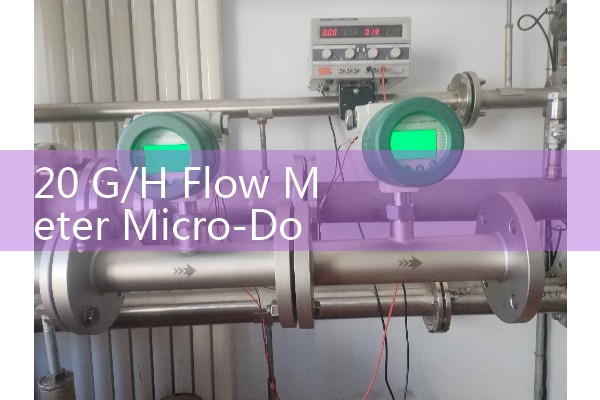
III. Customized models with tilting installation are only suitable for special working conditions where vertical installation cannot be achieved on site. Some manufacturers can provide customized tilting installation type float flow meters, but the actual installation tilt angle needs to be notified in advance. During the calibration and dispersion stage, the force and flow parameters should be synchronously corrected. The allowable installation tilt angle for this type of model generally does not exceed ± 15 °, and the measurement accuracy can be maintained within ± 2% FS. Tilting installation is strictly prohibited for ordinary general models.
.4. On site emergency response suggestions: If the installation has been tilted and cannot be adjusted to a vertical state, contact the original factory for targeted error correction methods, and do not directly read the scale;
; It is necessary to regularly check the float for sticking and the wear of the cone tube to avoid fluid leakage or measurement errors.