

 Current position > Product detail
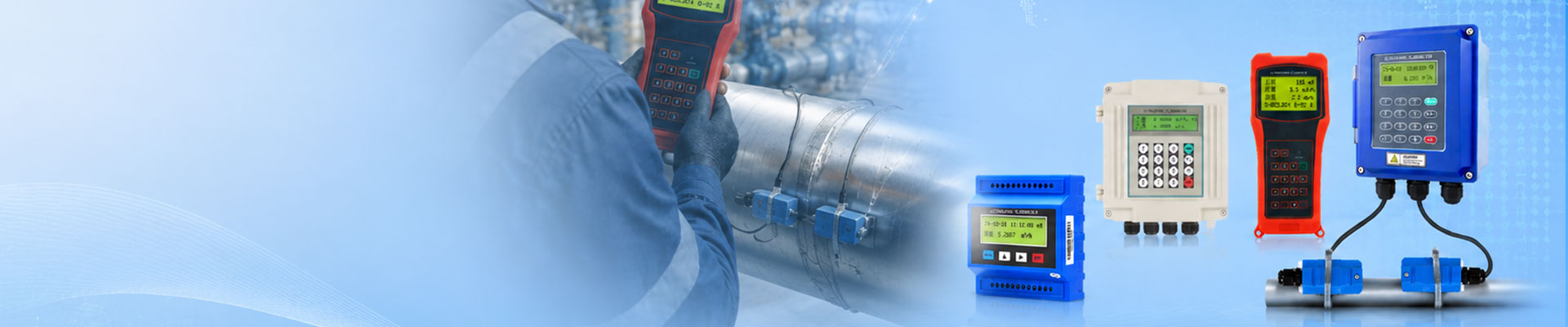
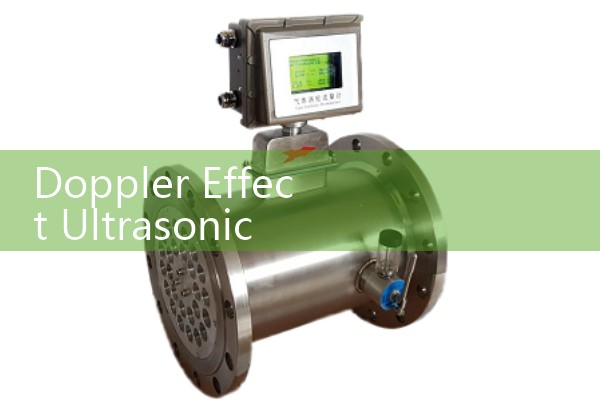
『Doppler Effect Ultrasonic Flow Meter: Using acoustic shifts to measure aerated or particulate fluids.』Related information(clamp on meter|electromagnetic meter|venturi meterrotameter|orifice meter|ultrasonic flow meter|mass flow meter|coriolis mass flow meter|coriolis flow meter|magnetic flow meter|magmeter flow meter|magflow flow meter|mag meter flow meter|electromagnetic flow meter|vortex flow meter|turbine flow meter|thermal mass flow meter|thermal flow meter|rotameter flow meter)

Quick Answer: A Doppler effect ultrasonic flow meter measures flow by detecting the frequency shift of sound reflected from bubbles, solids, or other discontinuities in the fluid. It works reliably in dirty, aerated, or particulate-laden liquids where other meters struggle. For a quick quote, send us your pipe material, fluid type, solids content (%), and pipe outer diameter.
Most engineers skip this part because the physics sound simple. A transducer clamps onto the outside of a pipe, sends an ultrasonic beam into the fluid, and listens for the echo. If the fluid is completely clean and bubble-free, a Doppler meter will not read at all. It needs targets. That is the key difference from transit-time ultrasonic meters, which demand clean liquids.
In practice, Doppler flow meters are the go-to choice for aeration basins in wastewater plants, dredging slurries, mining tailings, or any line where you have at least 100 ppm of suspended solids or entrained gas. We have supplied these meters to a tapioca starch producer in Thailand, a sand slurry pipeline in Western Australia, and a fish processing wastewater channel in Chile. In every case, the liquid was too dirty for magmeters or transit-time clamps.
How the acoustic shift translates to flow rate
A single transducer emits a continuous wave at a fixed frequency, typically 640 Hz to 1 MHz depending on pipe size and penetration needs. Particles or bubbles moving with the fluid reflect the sound back at a slightly different frequency. The meter measures the difference between transmitted and received frequency. The shift is proportional to the velocity of the reflectors. Because the reflectors travel at the same speed as the fluid, this gives you the average flow velocity.
Here is the thing. Most clamp-on Doppler meters assume a fully developed flow profile. If you have an elbow, valve, or pump discharge within 10 pipe diameters upstream, the accuracy drops off. We always tell customers that a 20D straight run upstream and 10D downstream gives the best result. The good news is that aeration or solids actually help the profile mix faster, so many real-world installations work fine even with less than perfect straight pipe.
Where Doppler beats transit-time and magnetic flow meters
Transit-time meters need a clean, single-phase liquid. A few percent of entrained air kills the signal. Magnetic flow meters need a full pipe and a conductive liquid. Doppler meters do not care about conductivity or viscosity. They work on sludge with 5% solids, raw sewage, pulp stock up to 6% consistency, and cement grout. One limitation you should know: the fluid must flow fast enough to keep solids suspended. Below about 0.3 m/s, the largest particles might settle out and the frequency shift becomes too small to detect reliably.
A food processing plant in Vietnam called us last year. They pasteurize coconut milk with 12% fat and fine coconut particles. Their electromagnetic flow meter would drift because of the insulating oil droplets. We recommended a Doppler clamp-on meter on the DN50 transfer line. They installed it in 30 minutes without cutting the pipe. The signal remained stable because the suspended solids and oil droplets provided continuous reflectors.
Installation details that affect your reading
You can mount the clamp-on sensor on metal pipes (carbon steel, stainless steel, copper) or plastic pipes (PVC, HDPE, PVDF). For concrete, wood, or fiberglass pipes, a Doppler meter still works if the inner wall is smooth and you use a coupling gel designed for porous surfaces. Pipe wall thickness up to 50 mm is usually acceptable for a 1 MHz sensor. Thicker walls need a lower frequency, which means a larger sensor and slightly higher minimum velocity.
The transducer must couple acoustically to the pipe. We ship every Doppler meter with a tube of silicone couplant. In permanent installations, you can also use epoxy bonding or a mounting track with screw clamps. Do not use a Doppler meter
Typical applications by industry
Wastewater plants use Doppler meters on return activated sludge lines, scum lines, and primary sludge. Mining operators measure backfill slurry, tailings thickener underflow, and magnetite dense medium in coal prep plants. In the marine sector, Doppler meters handle bilge water with oil and solids. Dredging companies measure sand-water mixtures in 400 mm and larger pipes. A desalination plant in Saudi Arabia used our Doppler meter on the brine recirculation line because the fluid was full of precipitated scale particles.
One offshore platform in the Gulf of Thailand measures produced water with up to 2% sand cut. They tested three meter types before choosing the Silver Instruments Doppler clamp-on. The pipe is a DN150 schedule 80 carbon steel. The meter reads stable at 1.8 m/s average velocity. They check the reading once a month against a strapped-on portable unit and find the drift is within 1.5% of rate.
Key specifications and output options
Our Doppler flow meters come with a compact transmitter that can be mounted locally or on a wall. The standard output is 4-20 mA and a pulse output for totalization. RS485 Modbus RTU is optional. The transmitter has a backlit display showing flow rate in m³/h, L/s, or user-selected engineering units. Totalizer data is stored in non-volatile memory. Accuracy under installed conditions is typically 2% of reading from 0.3 m/s to 10 m/s, with repeatability of 0.5%.
Power options include 24 VDC, 85-265 VAC, or battery power with a solar panel for remote sites. In Southeast Asia and the Middle East, we often see requests for the 24 VDC version for integration with existing PLC panels. The enclosure is IP66 die-cast aluminum, suitable for outdoor installation in tropical rainfall. The sensor working temperature range is -40°C to +120°C for standard models. High-temperature versions go up to 180°C with a metal-jacketed cable.
FAQ
What is the minimum solids concentration needed?
Doppler meters require at least 100 ppm of suspended solids or entrained bubbles larger than 100 microns. In practice, if you can see turbidity, the meter will probably read.
Can I use a Doppler meter on a pipe smaller than DN15?
The minimum recommended size is DN15 for metal pipes and DN25 for plastic. Smaller pipes limit the sensor contact area and the acoustic window. For tubing under 15 mm, a dedicated low-flow Coriolis meter is a better choice.
Does a Doppler meter need a straight run?
Yes, 10 upstream and 5 downstream pipe diameters as a minimum. For the best accuracy, use 20D upstream and 10D downstream. You can reduce this if the fluid is fully developed and contains heavy solids, but we prefer to stay within guidelines.
Is the Doppler flow meter suitable for hazardous areas?
Yes, we can supply the transmitter in Ex d or Ex ia enclosure for ATEX Zone 1 and 2 or IECEx areas. Specify your hazardous area classification and gas group when you request a quote.
How do I get a quote quickly?
Send us your pipe outside diameter, wall thickness, material, fluid type, solids content, temperature, and flow range. Email these details to [email protected] or WhatsApp +86-25-52155837. We reply with a price and lead time within one working day.
Silver Automation Instruments supplies Doppler ultrasonic flow meters as part of a broader range that includes Coriolis, electromagnetic, vortex, oval gear, and thermal mass flow meters. Whether you need a DN10 clamp-on sensor for a chemical dosing line in Latin America or a DN600 slurry meter for a copper mine in Africa, send us your data and we will recommend the right model. Call +86-25-68650347 or connect on WeChat at +86 15365082610 for a technical discussion.