

 Current position > Product detail
『Flow Meter Bag: Concepts of airflow testing in industrial dust collection systems.』Related information(clamp on meter|electromagnetic meter|venturi meterrotameter|orifice meter|ultrasonic flow meter|mass flow meter|coriolis mass flow meter|coriolis flow meter|magnetic flow meter|magmeter flow meter|magflow flow meter|mag meter flow meter|electromagnetic flow meter|vortex flow meter|turbine flow meter|thermal mass flow meter|thermal flow meter|rotameter flow meter)
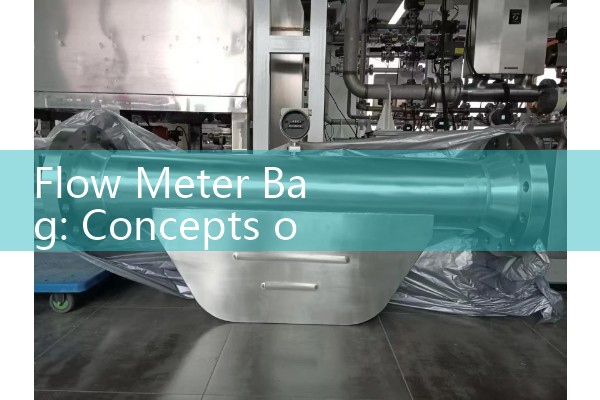
Flow Meter Bag: Measuring Airflow in Dust Collection Systems
Quick Answer: A flow meter bag is not a physical bag. It is a shorthand term engineers use for the airflow measurement point on a baghouse or cartridge dust collector. You measure the air volume (in m³/h or CFM) moving through the ductwork with a thermal mass flow meter, a pitot tube with a differential pressure transmitter, or a vortex flow meter. This data tells you if the dust collection system is balanced, if filter bags are blinded, or if a fan is underperforming.
In practice, we see many plant managers ignore airflow testing until a compliance officer shows up or product recovery drops. A cement plant in Thailand called us last year because their baghouse outlet opacity spiked. The root cause was simple. Three of six inlet ducts had collapsed dampers. The remaining ducts were carrying 70 percent of design flow without anyone knowing. A single insertion thermal mass flow meter on the main stack would have caught this months earlier.
Why Airflow Testing Changes Everything in a Baghouse
Dust collectors move air. Too little airflow and dust settles in the ducts, creating a fire risk in woodworking or grain handling. Too much airflow and you push fine particles through the filter media, raising emissions and shortening bag life. The sweet spot is the design air-to-cloth ratio, typically 0.8 to 1.5 m/min for pulse-jet baghouses handling cement or fly ash. To hold that ratio you need to know the actual volumetric flow in real time.
Many maintenance teams use a handheld pitot tube once a year. That snapshot helps, but it misses shifts in humidity, filter loading, and damper position. Continuous inline monitoring with a fixed flow meter gives the operator a live reading on the control panel. The output signal, often 4-20 mA HART or Modbus RTU, feeds directly into the PLC or a paperless recorder.
Where to Place the Flow Meter in a Dust Collection Duct
Placement matters more than the meter brand itself. We have seen installations with a straight run of only 1.5 pipe diameters upstream. That creates a turbulent, swirling profile that makes any reading useless. The minimum straight run for a thermal mass flow meter is 15 DN upstream and 5 DN downstream. For a vortex meter you need 20 DN upstream in a clean gas line. If your duct is DN600 and you only have 2 meters of straight pipe before an elbow, do not install there. Move the measurement point to the stack outlet or a long horizontal section after the fan.
Good locations include the main exhaust stack, a clean air plenum, or an individual inlet branch to a large baghouse compartment. On one project in a Middle East gypsum plant we put six insertion thermal probes on the inlet ducts of a 16-compartment baghouse. The operator found one compartment pulling 40 percent more air than the rest. They adjusted the inlet damper and balanced the flow in a single shift. Bag life increased by 8 months.
Flow Meter Types That Work for Dirty Air and Clean Air
Thermal mass flow meters are the most common pick for baghouse applications. They work on the principle of heat dissipation. Two RTD sensors (reference and heated) sit in the gas stream. Higher gas velocity cools the heated sensor more, and the meter converts that cooling effect into mass flow. No need for separate temperature and pressure compensation. They measure direct mass flow in kg/h or Nm³/h, which is ideal for reporting emissions under standard conditions. The insertion probe style fits through a 1.5 inch ball valve and hot-taps into a DN100 or larger duct without shutting down the process. Look for a meter rated to 200 °C with a PVDF or 316L probe if you handle moist, slightly corrosive exhaust from a food dryer.
Pitot tubes with a differential pressure transmitter still have their place. A standard L-type or S-type pitot connected to a 0-10 mbar DP transmitter gives you velocity pressure. You need an external RTD and a pressure sensor to convert to normal flow. This setup costs less upfront for a large duct, say DN1200 and above, but it struggles with sticky dust that blocks the impact hole. Install a purge unit or use a retractable probe with automatic blowback to keep it clean.
Vortex flow meters work on clean air applications, such as the compressed air line feeding pulse-jet cleaning. Compressed air flow to the baghouse is a hidden cost. A pulse of 4 to 6 bar air through a blowpipe clears the bags. If the pulsing wastes air due to a leaking diaphragm valve, you lose thousands of dollars per year in energy. A vortex meter on a DN25 compressed
Sizing and Specifying the Right Meter
Send us the following data and we will propose a meter that fits your duct and your budget: duct diameter (DN), normal gas flow range (Nm³/h or kg/h), gas temperature (°C), static pressure (bar or mbar), gas composition if you have it, and humidity level. For a typical 150 kW wood dust extraction system with a DN500 main duct and 25,000 m³/h flow at 30 °C and ambient pressure, we often recommend a Silver Instruments insertion thermal mass flow meter with an integral display and 4-20 mA output. If the location is ATEX Zone 22, the probe will carry an Ex nA or Ex tb certification. For a chemical plant handling solvent-laden exhaust in Zone 1, a fully Ex d IIC T4 device is mandatory.
Power supply options are 24 VDC loop-powered for simple wiring or 220 VAC with a separate transmitter. Most customers choose the 24 VDC version and connect it to a SIL isolation barrier in the control panel. Communication choices include 4-20 mA, pulse, RS485 Modbus, or HART. If you already run a plant asset management system over HART on your other mass flow meters, stick with HART so maintenance can use the same handheld communicator.
Common Mistakes That Waste Time and Money
One mistake we see often: buying a flow meter rated for clean air and installing it on a raw mill exhaust full of moisture and fine limestone. Within two weeks the sensor head is coated and the reading drifts to zero. For dirty, wet gas streams, choose a meter with a self-cleaning probe shape or a model that allows easy extraction for cleaning. Another mistake is ignoring velocity range. If your duct runs at 3 m/s under low load but the meter minimum velocity is 5 m/s, you get a dead band. Check the turndown ratio. A good thermal mass flow meter has a turndown of 100:1, giving accurate readings from 0.5 m/s to 50 m/s.
A food powder plant in Brazil learned the hard way. They installed a vortex meter that was sized for the compressor nameplate flow, but actual blowdown flow was only 15 percent of that during normal operation. The meter cut off below its minimum Reynolds number and showed zero. They replaced it with a thermal mass meter sized for the actual flow and saw an immediate reading of 28 Nm³/h peak pulse consumption.
FAQ on Airflow Testing in Baghouse Systems
Q1: Can I use a handheld anemometer at the baghouse outlet?
No. Handheld vane anemometers lose accuracy in ducts above 50 °C and introduce leakage around the measurement hole. A fixed insertion probe with a compression fitting is safer and more repeatable.
Q2: How often should I recalibrate a thermal mass flow meter?
For clean air, every 24 months is typical. For dirty or moist gas, we recommend an annual check against a calibrated pitot traverse. Silver Instruments offers an ISO 17025 calibration certificate with each meter.
Q3: Does the meter need straight run after the baghouse fan?
Yes. The fan discharge has high swirl. You need at least 10 pipe diameters downstream of an axial fan before the measurement point. Centrifugal fans need 7 to 10 DN, depending on the outlet configuration. If space is tight, flow straighteners can reduce the requirement.
Q4: Can one flow meter cover multiple baghouse compartments?
Only on the common outlet stack. For individual inlet ducts you need one probe per duct. For a 10-compartment baghouse with 10 inlet ducts, budget for 10 insertion meters or a single meter on the main stack plus manual damper adjustments.
Q5: What is the payback period for installing these meters?
A typical baghouse airflow monitoring system for a medium plant costs between USD 2,000 and 5,000 installed. With extended bag life of 6 to 12 months, reduced compressed air usage, and avoidance of a single emission exceedance fine, the payback is usually under 8 months.
Get a Quote Tailored to Your Baghouse
Every dust collection system is different. Share your duct size (DN), flow range, gas temperature, pressure, and electrical zone classification with us. We will suggest a meter model, probe length, and process connection type that suits your site. Contact Silver Automation Instruments at [email protected], call us at +86-25-68650347, or message us on WhatsApp at +86-25-52155837 or WeChat at +86 15365082610. Our technical team speaks English, Spanish, and Portuguese and responds within one business day across Southeast Asia, Oceania, Latin America, Africa, and the Middle East.