

 Current position > Product detail
『Engine Oil Flow Meter DN15: Accurate Metrics for Dynamometer Bench Tests』Related information(clamp on meter|electromagnetic meter|venturi meterrotameter|orifice meter|ultrasonic flow meter|mass flow meter|coriolis mass flow meter|coriolis flow meter|magnetic flow meter|magmeter flow meter|magflow flow meter|mag meter flow meter|electromagnetic flow meter|vortex flow meter|turbine flow meter|thermal mass flow meter|thermal flow meter|rotameter flow meter)
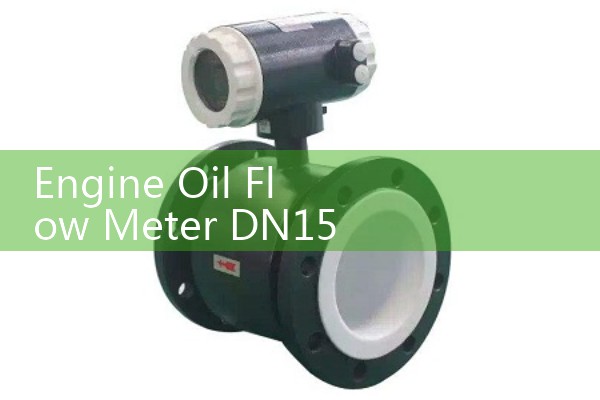
Engine Oil Flow Meter DN15: Accurate Metrics for Dynamometer Bench Tests
Quick Answer: A DN15 engine oil flow meter captures real-time lube oil consumption on dynamometer benches. Silver Automation Instruments supplies oval gear and Coriolis meters with accuracy up to ±0.2% of reading. Send us your flow range in kg/h, oil temperature, and pipe connection type, and we will return a fixed price within 24 hours.
Why a Dedicated DN15 Meter for Engine Oil Testing
Engine test cells and dynamometer benches live and die by repeatable data. Most test engineers spend days chasing a 1% drift in fuel or oil flow readings. That drift often comes from a flow meter that is too large, or from an instrument not built for hot, viscous media. A DN15 flow meter sized for 0.4 to 40 L/h of engine oil cuts out that noise. The small internal volume and short response time give you a flow trace that truly reflects what the oil pump is doing at each rpm step.
Here is the thing. On a dyno bench you are not just measuring total oil consumption. You need to see the transient behaviour during cold start, warm-up, and full-load sweep. A meter with slow response will average out these spikes. A DN15 oval gear meter from Silver Instruments, with a pulse output of up to 2,000 pulses per litre, shows you every ripple in flow. In practice, we have seen customers reduce their test repeatability error from ±1.5% to under ±0.3% just by switching to the right meter size.
Meter Technology That Fits the Bench
Not every flow meter can handle SAE 10W-40, 15W-50, or synthetic racing oils at 80°C to 120°C. Electromagnetic meters need conductive liquids and are useless with pure hydrocarbons. Turbine meters wear quickly with viscous fluids and give a skewed K-factor. Ultrasonic meters struggle with the sound path in small DN15 pipes and high viscosity. In our direct experience across Southeast Asian test labs, two technologies consistently deliver: oval gear positive displacement and Coriolis mass flow.
Oval gear flow meter, DN15: This is our workhorse for engine oil. The aluminium or stainless steel body handles viscosity from 5 to 2,000 cP without losing accuracy. A PT100 sensor embedded in the meter body gives you temperature-compensated volume. The 4-20 mA HART output connects directly to the dyno DAQ. We have shipped this meter to a transmission test lab in Thailand, where they measure ATF flow at 90°C with ±0.5% accuracy.
Coriolis mass flow meter, DN15: When the test protocol demands mass flow in kg/h, density, and temperature in one device, a miniature Coriolis meter is the answer. Our Silver Instruments micro-Coriolis series starts at 0 to 40 kg/h and measures directly in mass. No need to convert volumetric readings with fluctuating density. Last year a customer in Indonesia asked us to replace a bank of turbine meters on a motorcycle engine dyno. The Coriolis meter not only gave them oil mass consumption but also detected aeration in the oil line by monitoring density variation. That alone saved them from misdiagnosing a bearing failure.
Installation Details Engineers Lose Sleep Over
The DN15 meter body is compact, but the surrounding pipework makes or breaks the measurement. We say this because we see it on customer sites many times. On a typical dyno cell, the oil meter sits between the engine oil gallery and a conditioning unit. A common mistake is placing the meter right after a bend or a pressure regulator. That creates swirl and irregular velocity profiles even in a positive displacement meter. Our preconfigured skid includes a straightening vane and a mesh strainer with 200 µm rating. The strainer blocks carbon particles that can lock an oval gear meter. We recommend 10 diameters of straight pipe upstream and 5 downstream. Or simply bolt our integrated measurement block directly onto the test cell plumbing.
Temperature control matters too. Engine oil leaving the main gallery can be 110°C or more. We size the meter with high-temperature FKM or PTFE seals. The standard aluminium body is rated to 120°C and 40 bar. For extreme tests with 20W-60 oil at 130°C, we switch to a stainless steel meter body and all-metal seals. A PT100 output is always included for media temperature logging. The 4-20 mA signal for flow, plus a separate 4-20 mA for temperature, feed straight into an Ether
Calibration and Traceability for ISO 17025 Labs
A flow meter without a traceable calibration certificate is just a chunk of metal on a test bench. Every Silver Instruments DN15 oil flow meter leaves our factory with a 5-point calibration using actual calibration oil matching your viscosity as closely as possible. The certificate states deviation at each point against a master meter traceable to national standards. If your lab works under ISO 17025, we provide an optional DAkkS or CNAS accredited calibration. For a mining equipment lab in Western Australia, we calibrated a meter on SAE 30 monograde oil at 80°C because that matched their locomotive engine tests exactly.
Most engineers skip this part but it is critical. The pulse scaling factor (K-factor) printed on the meter tag must be entered correctly into the dyno control software. A single digit error in a K-factor of 1,185 pulses per litre can throw off your brake specific oil consumption calculation by half a percent. With our meters, the certificate includes the K-factor in pulses per litre, pulses per gallon, and pulses per cubic centimetre. We also email a ready-to-import XML file for AVL Puma, HORIBA STARS, or NI LabVIEW systems upon request.
Real-World Accuracy on a Dyno Bench
Let us talk numbers. A gasoline engine on a 250-hour durability test may consume oil at a rate of 0.5 to 2.0 L/h at full load. A DN15 oval gear meter with a measuring range of 0.4 to 40 L/h sits right in the sweet spot. The linearity in the upper 70% of the range is typically ±0.2% of reading. That means at 1.0 L/h your measurement uncertainty is around ±2 mL/h. In a 24-hour test, that represents less than 50 mL of oil consumption uncertainty. Our Coriolis meter pushes that even lower, to ±0.1% of rate, allowing labs to detect abnormal ring scuffing within minutes instead of hours.
We have seen a paint manufacturer in Southeast Asia use a similar meter to control solvent dosing. But for engine oil, the key metric is not just accuracy under steady flow. It is response to step changes. In a fast load step from 2000 rpm to 6000 rpm, the oil flow can jump from 0.8 L/h to 3.5 L/h within 5 seconds. A slow thermal mass flow meter would smear this transition. Our oval gear meter with a response time below 200 ms captures the shape of the flow ramp perfectly. If you need to study the correlation between oil flow and camshaft phaser response, this speed is non-negotiable.
FAQ: Engine Oil Flow Meter DN15 for Dyno Applications
What is the best flow meter principle for engine oil on a dynamometer?
For most dyno cells, oval gear positive displacement gives the best balance of accuracy, cost, and tolerance to viscosity changes. For research labs needing direct mass flow plus density, a Coriolis meter is the preferred choice.
Can the DN15 meter handle oil at 120°C continuously?
Yes. The standard aluminium oval gear meter with FKM seals is rated for 120°C. For higher temperatures or aggressive synthetic oils, we offer a stainless steel version rated to 150°C.
How do I connect the meter to an AVL or HORIBA automation system?
Our meter outputs frequency/pulse and 4-20 mA analogue. An optional RS485 Modbus RTU board provides direct digital communication. We can supply a wiring diagram and XML configuration file for your specific testbed software.
What maintenance does an oval gear meter need in engine oil service?
Clean the integral mesh strainer every 500 hours of engine run time. The meter itself only needs inspection if you see erratic readings. We supply a spare seal kit with every meter for field rebuilds.
I need a meter for a motorcycle engine dyno with very low oil flow. Is DN15 the right size?
Motorcycle engines often consume 0.1 to 0.5 L/h of oil. A DN15 meter with a lower measurement range of 0.05 to 5 L/h is available. Contact us with your exact minimum and maximum flow expectations, and we will size the meter accordingly.
To get a specific quote, send an email with your oil type, expected flow range, pipe thread preference (BSP, NPT, or flanged), and operating temperature to our technical team. We will respond with a full data sheet and a firm price. See our oval gear flow meter selection at Silver Automation Instruments.