

 Current position > News detail
『Calibrating a Raven Flow Meter for Precision Precision Agricultural Spraying』Related information(clamp on meter|electromagnetic meter|venturi meterrotameter|orifice meter|ultrasonic flow meter|mass flow meter|coriolis mass flow meter|coriolis flow meter|magnetic flow meter|magmeter flow meter|magflow flow meter|mag meter flow meter|electromagnetic flow meter|vortex flow meter|turbine flow meter|thermal mass flow meter|thermal flow meter|rotameter flow meter)
Calibrating a Raven Flow Meter for Precision Agricultural Spraying
Quick Answer: To calibrate a Raven flow meter for precision spraying you need a steady water source, a known volume catch test, and the meter’s pulse per unit adjustment. The standard procedure is to enter the calibration mode on your Raven console, run a set volume through the flow meter, and allow the controller to recalculate the K-factor based on actual delivery. For the highest field accuracy many operators verify the meter against a calibrated reference flow meter, especially when spraying viscous fertilizers or working in variable rate applications.
Why Calibration Goes Wrong in the Field
A Raven flow meter counts pulses, not litres. It relies on a programmed K-factor, the number of pulses per litre or per gallon, to convert rotation into volume. When the K-factor drifts after a season of wear or if you swap the meter between sprayers without re-entering the correct value, the application rate drifts with it. We saw this on a citrus farm in the Lalitpur province of Nepal. The operator complained of poor pest control, and a catch test revealed an eight percent under-application. The cause was a K-factor still set from a previous pump with a different flow range.
Physical wear matters too. A Raven RFM 60P turbine meter used with liquid urea ammonium nitrate, which runs around 5 cP to 8 cP, can develop pitting on the rotor over a single season. The slight change in blade angle shifts the pulse output and makes the factory K-factor invalid. In practice, most engineers skip the wear inspection and go straight to re-calibration. That works but only if the meter is mechanically intact.
How to Calibrate a Raven Flow Meter on the Sprayer
First, confirm the console settings. On a Raven 440, 450, or Viper 4, you need to set the flow meter type and the initial K-factor. Many Raven turbine meters for DN15 or DN20 pipe have a starting K-factor around 58 to 72 pulses per litre. The exact number depends on the meter model and nozzle configuration.
Here is the thing about catch testing. Fill the sprayer tank with clean water. Open all boom sections and set the pressure at your typical operating point, often 2.5 bar to 3.0 bar. Place a calibrated container under the flow meter outlet or use the sprayer total volume display. Run the sprayer until the console indicates 100 litres have passed. Now measure the actual volume collected. If you collected 94 litres instead of 100, the system is over-reporting flow. Enter the calibration menu and tell the console the true volume. The Raven processor then adjusts the K-factor downward to match reality.
Repeat the test at least twice. Repeatability within one percent is achievable with water. But if the error changes randomly between runs, check for air leaks on the suction side or a partially blocked strainer. A constant small error points to K-factor drift. A jumping error points to mechanical or plumbing problems.
When to Use an External Reference Flow Meter
Catch tests work for water but become messy with actual tank mixes. Many professional applicators in Southeast Asia and Oceania now use a portable reference flow meter to verify the Raven meter in real time, without draining anything. A coriolis mass flow meter inserted temporarily in the spray line can read mass flow and density directly, unaffected by viscosity changes. Silver Instruments supplies a range of compact coriolis meters with a DN15 or DN10 connection and 4-20 mA HART output that can act as the verification standard.
Last year, a pesticide formulator in Thailand needed to calibrate Raven meters across twelve trailer sprayers. They used a Silver Instruments coriolis meter as the master and found that three of the Raven meters had errors exceeding five percent after only 200 hours of use. Those meters were replaced rather than recalibrated because the internal bearings were too worn to hold a steady K-factor. The remaining nine were adjusted and cross-checked in under half an hour each.
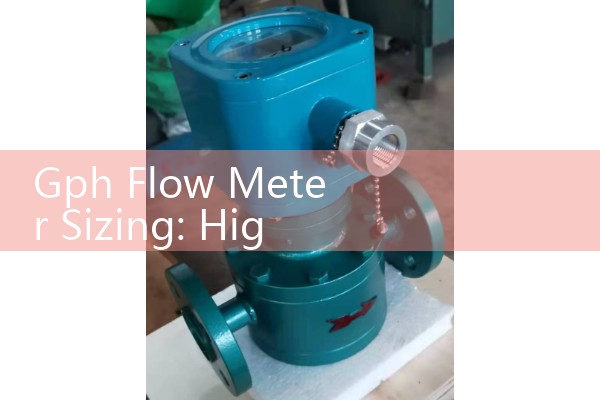
For operators who prefer a lower-cost reference, an oval gear flow meter with pulse output and a local display is another solid choice. An oval gear meter ignores moderate viscosity shifts and gives a pulse-per-litre output that you can feed straight into a frequency counter. A small DN15 oval gear meter from Silver Instruments, paired with a PT100 temperature sensor, can serve as a portable field calibration kit fo
Adjusting K-Factor for Different Chemicals
Water has a viscosity near 1 cP. Many agricultural chemicals raise the viscosity enough to alter the meter’s response. For a turbine meter, higher viscosity usually reduces the K-factor slightly because the fluid drags on the rotor. A change from water to a 10 cP solution can shift the pulse count by two or three percent. If you calibrate with water and then spray a thick suspension, the actual applied volume will be lower than the console indicates.
The fix is to calibrate with the actual spray mixture whenever possible. If that is not practical, use a reference liquid with a similar viscosity. A simple way to check is to run the same volume of the actual mixture through the Raven meter and collect it in a weighed drum. Divide the weight by the known density of the mixture. This gives the actual volume. Then adjust the K-factor accordingly. Most operators skip this part due to time pressure, but missing it can cause visible striping in the field.
Common Mistakes Seen on Customer Sites
One frequent error is calibrating at a flow rate that does not match spraying. A Raven meter calibrated at 120 litres per minute may read differently at 40 litres per minute if the turndown ratio is stretched. Check the K-factor linearity across your working range. Another issue is forgetting to reset the total flow after a partial calibration run. The console counts every pulse from the moment you start, so an incomplete reset muddles the calculation.
We have seen many cases where a DN25 Raven meter installed downstream of a centrifugal pump suffered from unstable pulse output because of swirling flow. Adding a short straight pipe section of ten times the pipe diameter before the flow meter fixed the repeatability problem instantly. Because a turbine meter needs a uniform velocity profile, do not install it right after an elbow or a valve.
When to Replace Instead of Recalibrate
If after three calibration attempts the K-factor keeps wandering by more than five percent, the meter has likely reached the end of its service life. For a Raven RFM 15P meter operating in sandy well water conditions, bearing wear can accelerate quickly. Replacing the complete meter is more cost-effective than chasing a drifting K-factor. Silver Instruments can recommend a direct replacement with matched pulse output, or an upgrade to a meter with no moving parts if the budget allows.
FAQ
Q: How often should I calibrate a Raven flow meter?
A: At the start of each spraying season and any time you change the nozzle setup, pump, or chemical formulation. High-hour machines benefit from a mid-season check as well.
Q: Can I use a manual catch test for all calibration runs?
A: Yes, a catch test is the simplest method and works well for water-based mixes up to moderate viscosities. For thick suspensions or if you need ISO documentation, an external reference flow meter is preferred.
Q: What is the typical K-factor range for a Raven turbine meter?
A: For DN15 to DN20 turbine flow meters, the original K-factor usually sits between 55 and 75 pulses per litre. Always check the tag on the meter body for the factory value before starting.
Q: Does temperature affect the calibration?
A: It affects density more than pulse output, but extreme changes from 5 °C to 40 °C can shift the mechanical clearance inside the meter. For high-value crops, run the calibration with water at a temperature close to your spraying conditions.
Q: What if my Raven console does not allow K-factor adjustment?
A: Older consoles may require a manual pulse recalibration using a meter calibration factor scale. Refer to the controller manual. If the K-factor entry is locked, the console may need a firmware reset or replacement.
For assistance selecting a reference flow meter for Raven calibration send your operating pressure in bar, temperature in °C, pipe size in DN, and the flow range you need to [email protected]. You can also reach Silver Instruments by phone at +86-25-68650347, via WhatsApp at +86-25-52155837, or on WeChat at +86 15365082610. Our team regularly supports agricultural applicators across Southeast Asia, Latin America, and Oceania with field-tested calibration solutions.